
Notice: Membership Applications Temporarily Closed
Thank you for your interest in the work of the CCJ Academy for Law. The


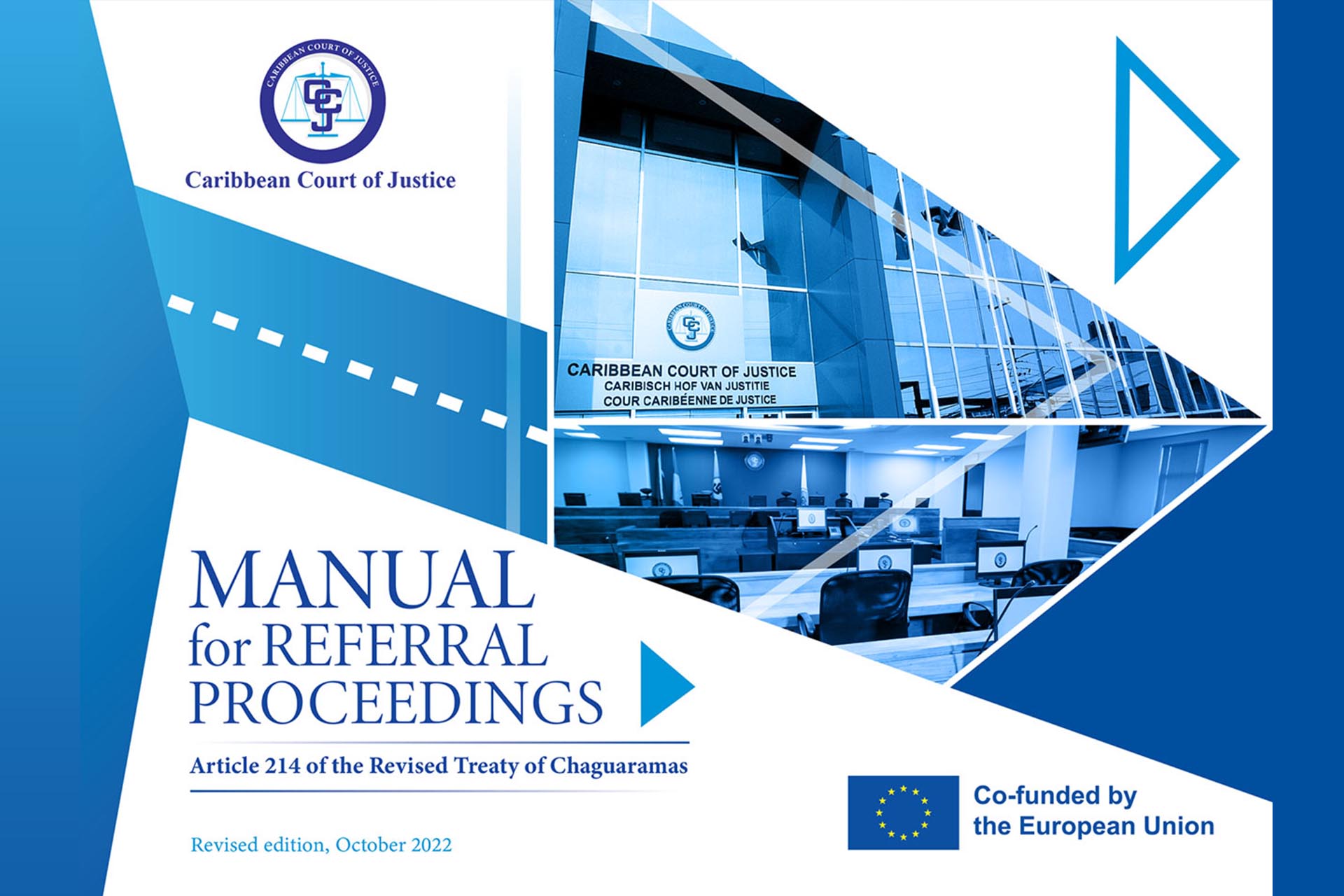
The Caribbean Court of Justice (CCJ) holds a unique position within the Caribbean legal system through its dual jurisdiction. In addition to serving as the final appellate court for Barbados, Belize, Guyana, Dominica, and Saint Lucia, the CCJ exercises Original Jurisdiction to hear disputes concerning the Revised Treaty of Chaguaramas Establishing the Caribbean Community, including the CARICOM Single Market and Economy (the “RTC”), with exclusive and compulsory authority to interpret and apply the RTC.
As part of its ongoing commitment to advancing justice, promoting judicial and legal education, and strengthening the administration of Caribbean Community law, the CCJ Academy for Law, in collaboration with the CCJ and with financial support from the European Union’s 11th European Development Fund, undertook a comprehensive Referral Training Series across seven CARICOM Member States between 2022 and 2025. The Referral Training Series was inaugurated in Belize on 24 November 2022 and expanded across the Caribbean, with sessions held in Barbados, Guyana, Jamaica, Saint Lucia, Suriname and Trinidad and Tobago, focusing on the referral mechanism under Article 214 of the RTC. The referral mechanism allows national courts and tribunals of contracting parties to the Agreement Establishing the CCJ to refer questions concerning the interpretation and/or application of the RTC to the CCJ.
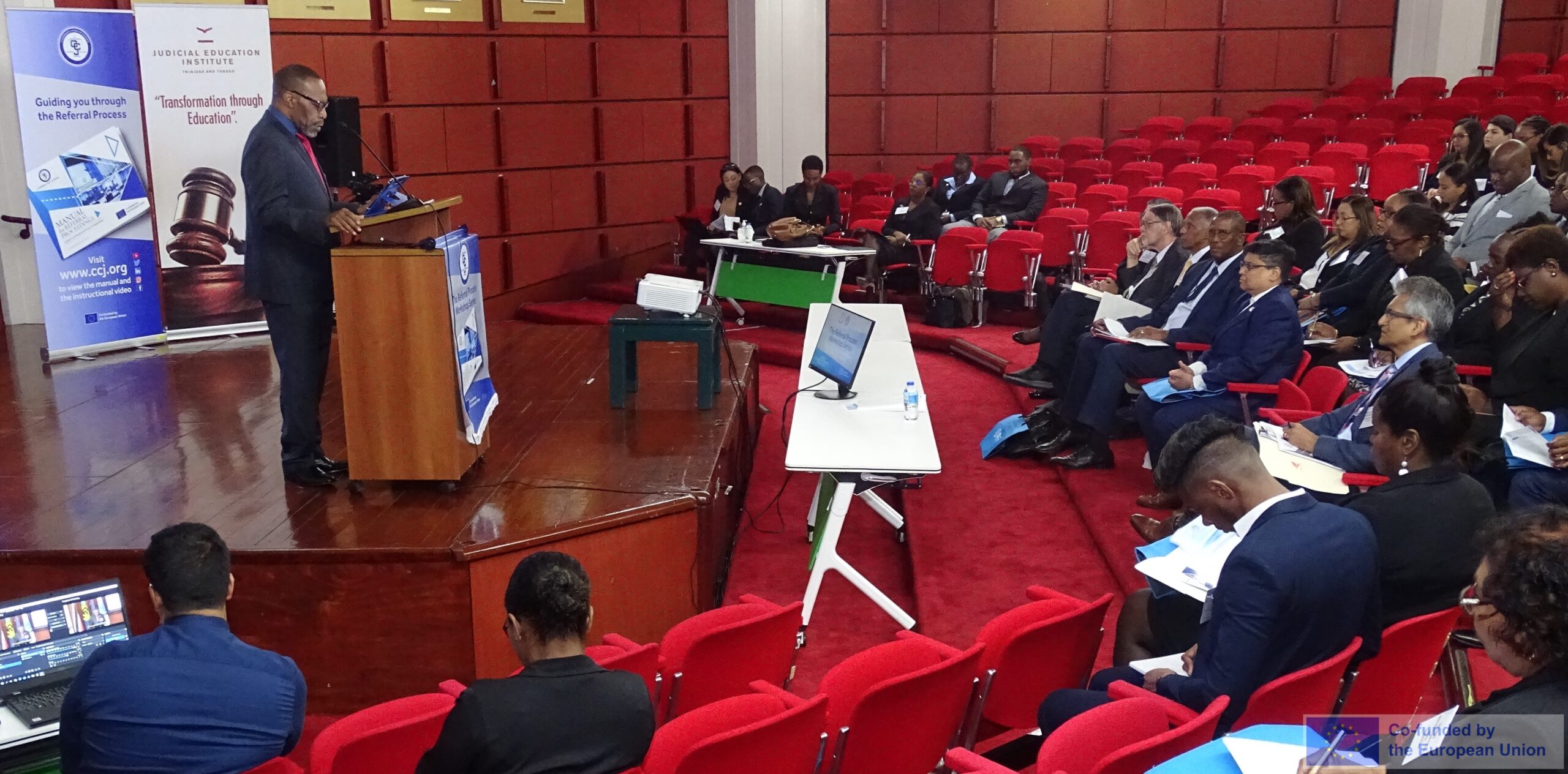
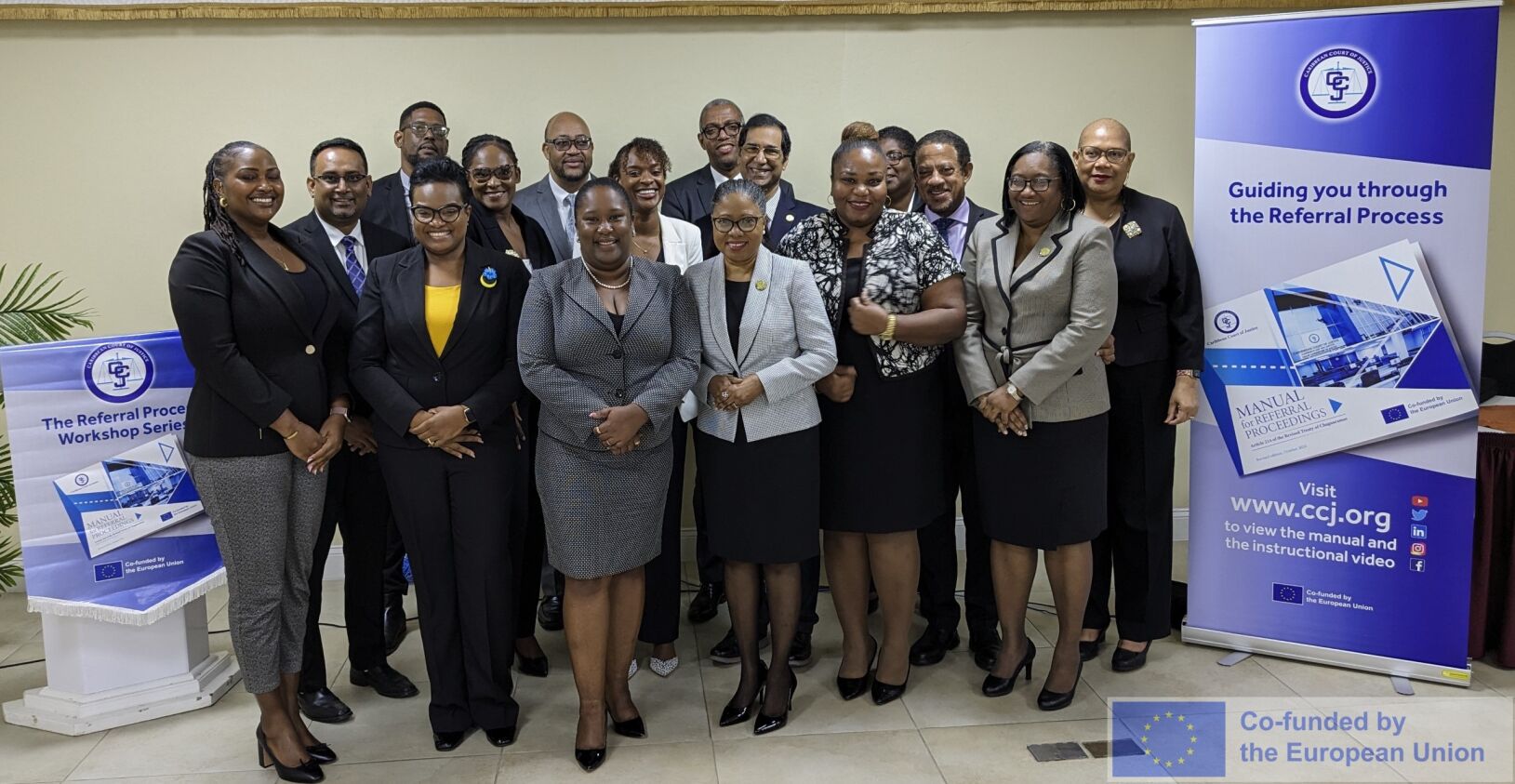
Throughout the training series, the programme engaged judicial officers, legal practitioners, academics, and private sector organisations through presentations, discussions, and simulation exercises designed to build confidence in the use of the referral procedure and deepen understanding of the CCJ’s Original Jurisdiction. Across the series, speakers consistently emphasised that the referral procedure is essential to ensuring the uniform interpretation and application of Caribbean Community law and that national courts play a vital role in the development of the Caribbean Single Market and Economy (CSME). The programme also reinforced the importance of strengthening judicial capacity, regional cooperation, and awareness of the CCJ’s Original Jurisdiction.
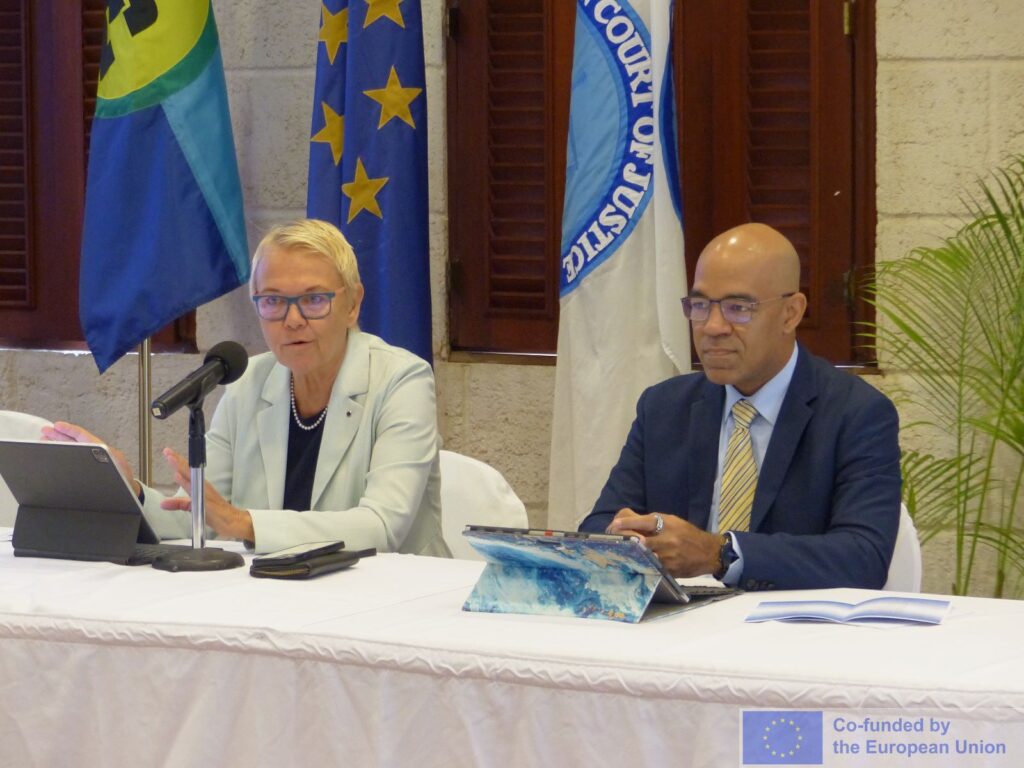
Reflecting on these themes, former CCJ President, the Honourable Mr Justice Adrian Saunders, observed during the Trinidad and Tobago workshop that although the country had been involved in a number of Original Jurisdiction matters, no referrals had yet originated from its domestic courts. He attributed this to limited familiarity with the procedure and expressed the hope that the training would equip judges and practitioners with the confidence to utilise the mechanism where appropriate. In Jamaica, Chief Justice the Honourable Mr Justice Bryan Sykes, OJ, described the RTC as a framework for rebuilding Caribbean societies through economic development, regional integration, and the free movement of people and capital. Representatives of the European Union, including His Excellency Peter Cavendish, Ambassador of the European Union to Trinidad and Tobago; Mr Piotr Byczkowski, Chargé d’Affaires of the European Union Delegation to Jamaica, Belize, and The Bahamas; and Her Excellency Malgorzata Wasilewska, Ambassador and Head of the Delegation of the European Union to Barbados, reaffirmed the EU’s commitment to judicial cooperation, the rule of law, and strengthening justice systems across the Region during sessions held in Trinidad and Tobago, Jamaica, and Barbados, respectively.
The series concluded in November 2025, with training for the Bar in Suriname. At the end of that month, on 28 November 2025, the participants at the 8th Biennial Conference of the CCJ Academy for Law through the Port of Spain Declaration on the Development of Caribbean Jurisprudence advocated for “greater awareness and use of avenues for the enforcement of Community rights, including the referral procedure under Article 214 of the Revised Treaty of Chaguaramas”. Following more than three years of sustained engagement, the Referral Training Series reached its defining moment with the CCJ receiving its first referral. On 3 July 2026, the CCJ delivered its ruling in Barrow v Financial Services Commission [2026] CCJ 3 (OJ) (RF), marking the first time that a national court had invoked the referral procedure established under the RTC.
The referral was received from the High Court of Belize in proceedings challenging Belizean statutory requirements applicable to certain companies with cross-border CARICOM connections. The referral specifically sought the Court’s interpretation of Article 177 of the RTC, which prohibits anti-competitive business conduct. In answering the referred question, the CCJ held that Article 177, which forms part of the Community Competition Policy, is directed at the anti-competitive conduct of enterprises rather than regulatory measures adopted by Member States. Accordingly, the Court ruled that Article 177 does not prohibit Member States from requiring companies incorporated in, or connected with, other CARICOM States to maintain and file documents through locally registered agents. The full ruling is available on the CCJ website.
The ruling marks a significant step in the development of the Original Jurisdiction of the CCJ. Beyond resolving the question referred by the High Court of Belize, it demonstrated the operation of the procedure that had been the focus of the regional capacity-building efforts. It also affirmed the collaborative role of national courts and the CCJ in ensuring the uniform interpretation and application of the RTC.
The Referral Training Series was delivered by a multidisciplinary team comprising Judges and officials of the Caribbean Court of Justice, representatives from the CARICOM Secretariat, and regional legal scholars. The programme featured contributions from members of the Bench of the CCJ, including the Honourable Mr Justice Winston Anderson, President of the CCJ, the Honourable Mr Justice Adrian Saunders, former President of the CCJ, the Honourable Mr Justice Jacob Wit, the Honourable Mr Justice Denys Barrow, the Honourable Mr Justice Peter Jamadar, and the Honourable Mme Justice Chantal Ononaiwu, who previously served as Director of External Trade at the CARICOM Secretariat before her appointment to the Court. The sessions were further supported by CCJ officials, including Suraj Sakal, Judicial Counsel; Ria Mohammed-Pollard, Communications and Information Manager; John Furlonge, Project Coordinator for the 11th EDF Support to the CCJ; and Jasmyn Sargeant, Judicial Counsel. Contributions from regional experts also included Dr Jan Yves Remy, Director of the Shridath Ramphal Centre for International Trade Law, Policy and Services at The University of the West Indies, Cave Hill Campus; Dr Jacintha Asarfi, Community Law Expert; and Ms Gladys Young, Assistant General Counsel at the CARICOM Secretariat. Together, these contributors provided judicial, institutional, and academic perspectives that supported the delivery and success of the Referral Training Series.
Faith Samuel
Thank you for your interest in the work of the CCJ Academy for Law. The

We are pleased to share with you an invitation to participate in a new global