PORT-OF-SPAIN, TRINIDAD AND TOBAGO
1. Communique
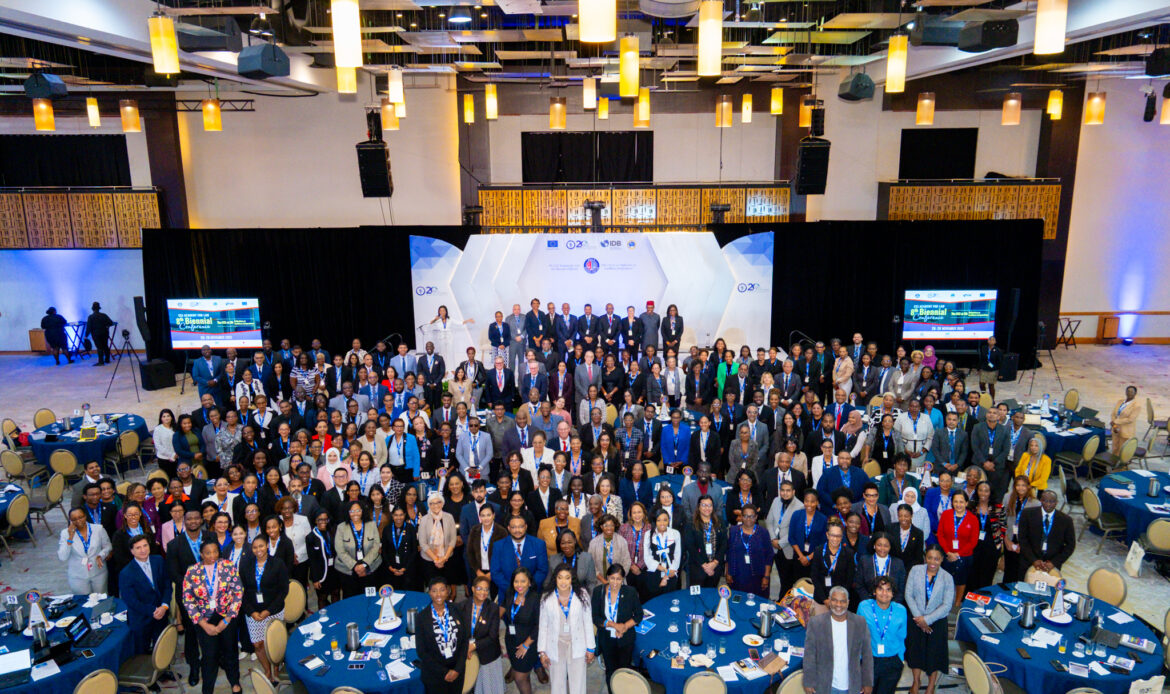
The 8th Biennial Conference of the CCJ Academy for Law was held from 26-28 November 2025, at the Hyatt Regency in Port of Spain, Trinidad and Tobago. The theme of the conference was ‘The CCJ at 20: Reflections on Caribbean Jurisprudence.’ This event marked the 20th anniversary of the Caribbean Court of Justice (CCJ), with support from the European Union (EU), Inter-American Development Bank (IDB), Caribbean Development Bank (CDB), Development Bank of Latin America and the Caribbean (CAF), LexisNexis, and the Office of the Attorney-General of Trinidad and Tobago.
The Conference welcomed judges, attorneys general, legal practitioners, academics, media personalities and students. With 50 speakers delivering addresses and participating in moderated panel discussions on diverse themes, the Conference was attended by more than 400 in-person and online registrants.
The Conference critically examined seminal developments in the jurisprudence of the CCJ and other courts in the region, as well as the role of stakeholders other than the judiciary in the future development of Caribbean jurisprudence. It provided a platform to explore contemporary legal issues and innovations and for meaningful dialogue among regional and international legal stakeholders.
2. Opening Ceremony
Welcome and Opening Remarks were delivered by the Honourable Mme Justice Chantal Ononaiwu, Judge of the CCJ, Deputy Chair of the CCJ Academy for Law and Conference Co-chair, and Lisa Shoman, SC, General Counsel of CARICOM.
Remarks followed from representatives of the main collaborating partners of the Conference, namely, Her Excellency Cécile Tassin, Ambassador of the Delegation of the EU to Trinidad and Tobago, Anton Edmunds, General Manager of the Caribbean Country Department at the IDB, and Dr Isaac Solomon, Vice President of Operations at the CDB.
A tribute to Mr Justice Jacob Wit was presented by the Honourable Mr Justice Winston Anderson, President of the CCJ and Chairman of the CCJ Academy for Law, who also formally declared the Conference open. This was followed by the launch of the CCJ’s 20th anniversary publication titled The Caribbean Court of Justice, Striving for Excellence: 20 Years of Evolving Justice.
The ceremony featured cultural presentations by John Thomas, Rhea Manley, Joshua Regrello, and Jaiso Mokos.
The opening ceremony can be viewed here.
Each day of the Conference was chaired consecutively by the Honourable Mme Justice Maureen Rajnauth-Lee, the Honourable Mr Justice Denys Barrow and the Honourable Mr Justice Chile Eboe-Osuji, Judges of the CCJ.
Over the course of the Conference, 14 areas were discussed through a series of individual addresses, structured conversations, and presentations. The salient findings and areas discussed are recounted.
3. Constitutional Law and Fundamental Rights
Dr Timothy Affonso, Lecturer in Law at the University of the West Indies (UWI) St. Augustine Campus, delivered an address titled ‘Unchartered Territory: Constitutionalism Re-imagined’. With reference to seminal cases of the CCJ, the address centred on judicial creativity, the Court’s performance and achievement of its mandate and continued challenges. Dr Affonso underscored the CCJ’s unwavering self-determinism from colonial tradition and conviction of purpose in advancing the true reflection of Caribbean constitutionalism.
Dr Kenny Anthony, former Prime Minister of Saint Lucia and Former Lecturer in Law at the UWI Cave Hill Campus, presented on the ‘Separation of Powers in Constitutional Litigation: Savings Law Clauses’. Dr Anthony commented on the need to find modalities for parliaments to respond to courts’ judgments, as the legislatures have been silent in the debate concerning the separation of powers, and there are pronouncements from judges with which parliamentarians may not agree. Dr Anthony also underscored the need for public policy and advisory opinions to provide clarity on the friction between courts and parliaments concerning savings law clauses, as well as more active Law Reform Commissions throughout the Caribbean.
A panel discussion moderated by the Honourable Mr Justice Arif Bulkan, Judge of the CCJ, focused on fundamental rights within Commonwealth Caribbean Constitutions. The Honourable Mr Justice Nolan Bereaux, Justice of Appeal, Trinidad and Tobago, examined the approaches of the CCJ and Judicial Committee of the Privy Council (JCPC) to the interpretation of savings law clauses. Mr Justice Bereaux underscored that the JCPC’s literal reading of savings law clauses is defensible, unavoidable and required by the constitutional text. While he commended the CCJ’s multi-step interpretive method, he opined that this exceeds judicial authority and registered the need for democratic change to be derived from Parliament rather than judicial modification. Douglas Mendes SC focused on the right to equality. In his analysis of recent case law, he suggested the presence of a broader problem, namely, mechanical or formalistic equality, which often obscures substantive inequality. He opined that the approach of courts in using the comparator test can mask how neutral-looking laws may still have disproportionately harmful effects. However, the CCJ’s evolving jurisprudence marks an important shift toward recognising discriminatory impact. The right to a fair hearing within a reasonable time was examined by the Honourable Mr Justice Navindra Singh, Chief Justice (Ag) of Guyana, who reiterated that public interest should not be prioritised over litigants’ rights and that a dynamic but principled balance must be struck, recognising that timely justice advances both individual rights and societal interests. Ultimately, delay violates constitutional rights, and systemic administrative failures are no excuse as timely justice is both a public and individual good. The remarks of Gabrielle Elliott-Williams, Lecturer in Law, UWI Mona Campus, focused on constitutional design and interpretation. Ms Elliott-Williams argued that the JCPC generally adheres to parliamentary supremacy and adopts a highly deferential approach, which is increasingly mismatched with Caribbean constitutionalism that requires upholding constitutional supremacy. Ms Elliott-Williams noted that the CCJ is more attuned to this postcolonial constitutional context but has not always been consistent in its application. In this regard, she cited the recent judgment in Controller of Supplies v Gas Tomza Ltd which highlights judicial hesitation in applying robust constitutional principles. Ms Elliott-Williams remarked that Caribbean constitutionalism demands, inter alia, a principled break from colonial legal assumptions, consistent decolonial reasoning across the Court and state institutions actively implementing rights-protective judgments.
4. Criminal Justice Reform
The Honourable Garth Wilkin, Attorney General of Saint Kitts and Nevis, addressed the Conference on his country’s criminal justice reform journey. He highlighted three catalysts for change: (1) the political will initiated by the declaration by the CARICOM Heads of Government in 2023 of crime as a public health issue, (2) the Needham’s Point Declaration on Criminal Justice Reform, adopted at the 7th Biennial Conference of the CCJ Academy for Law, as the main guide, and (3) the use of empirical data through partnerships and collaborations. The strategy included the formation of a multi-stakeholder justice committee, aggressive legislative reform, a 90-day campaign against crime and violence, a citizen security secretariat and the country’s partnerships with other countries. The Attorney General encouraged CARICOM Member States to adopt crime reduction strategies, emphasising that Saint Kitts and Nevis, one of the smallest countries in the Community, had been able to significantly curb the incidence of violent crime.
The ensuing structured conversation focused on the proposed interventions outlined in the Needham’s Point Declaration. The panel was moderated by the Honourable Mr Justice Ronnie Boodoosingh, Chief Justice of Trinidad and Tobago and featured the Honourable Mme Justice Louise Blenman, Chief Justice of the Senior Courts of Belize, the Honourable Mme Justice Lisa Ramsumair-Hinds, Judge of the Supreme Court of Trinidad and Tobago, the Honourable Mme Justice Georgis Taylor-Alexander, Judge of the Eastern Caribbean Supreme Court and Juliet Solomon, UNDP PACE Justice Project. Key areas highlighted included the Criminal Justice Board in Belize, which operationalises the Needham’s Point Declaration, the importance of collaborative efforts between all stakeholders to the achievement of criminal justice reform, the responsibility of judicial officers to manage cases carefully and to exercise their discretionary powers to reduce the time spent on remand and the use of sentencing guidelines to achieve transparency in sentencing. Other issues explored included the lack of guidelines for determining amounts to be awarded for victim compensation, the importance of balancing offenders’ means with victims’ needs and the cost-effectiveness of restorative justice mechanisms relative to criminal trials.
Another panel discussion focused on recommendations 5 and 27 of the Needham’s Point Declaration relating to asset forfeiture. The panel comprised the Honourable Justice Gillian Lucky, Justice of Appeal of Trinidad and Tobago, and Kisha Sutherland (Director of the Asset Recovery Unit of the Regional Security System) and was moderated by Guillermo Lagarda Cuevas (IDB). This session discussed the need to improve the asset forfeiture regime in the region, highlighting the utility of improved international co-operation, public engagement, legislative reform to account for the forfeiture of crypto-assets and crypto-related businesses and artificial intelligence (AI) for analytical purposes.
The National Centre for State Courts also made a presentation on the progress of a collaborative project between the CCJ Academy for Law and the IDB to develop a digital dashboard to monitor crime statistics in the region and the implementation of criminal justice reforms.
5. Developing Caribbean Jurisprudence in the context of Multiple Legal Systems
A structured conversation on developing Caribbean jurisprudence in the context of multiple legal systems was moderated by the Honourable Mr Justice Chile Eboe-Osuji and featured the Honourable Mme Justice Sandra Nanhoe-Gangadin, Senior Judge of the Court of Justice of Suriname, Professor Justice (Ret.) Courtenay Abel, University of Guyana, Dr Kenny Anthony and Dr Asya Ostroukh, Senior Lecturer, UWI Cave Hill.
The panel examined significant developments in Caribbean legal thought and institutional growth, including the evolution of regional courts and the impact of plural legal systems, which are attributable to diverse colonial, legal and socio-religious influences. The panellists each acknowledged that there is no singular or settled Caribbean legal identity. Rather, separate constitutions, separate apex courts, and differing rules, culture, legal systems, methodologies, among many other things, contributed to the fragmented nature of Caribbean legal identity. Nonetheless, the jurisprudence of Caribbean territories is developing, and there are identifiable legal doctrines and methodologies that have emerged and form part of the corpus that can be denoted as a Caribbean legal identity. Mr Justice Abel noted that these include a constitutional framework based on strong judicial review, rights informed by international law, the development of regional integration law, decolonial rights-based jurisprudence and common constitutional grammar such as ‘entrenched fundamental rights’ and constitutions as ‘living instruments’.
Dr Ostroukh reflected that Caribbean jurists are comparatists by default, reinforcing the idea that legal pluralism is part of the Caribbean legal identity and thus, diversity is the central component of Caribbean jurisprudence, and this diversity is the richness of the legal system. A distinction was clearly made between harmonisation, which was favoured, and unification, which should be avoided. The panellists emphasised that uniformity is unrealistic and undesirable; diversity is a hallmark of the Caribbean identity, and ‘to erase it would be to flatten the juridical economy’. Instead, the jurists suggested targeted convergence and harmonisation of certain principles and standards to, inter alia, promote ease of commerce, migration, integration and human rights.
Mme Justice Nanhoe-Gangadin pointed to the isolation of Surinamese persons from the CCJ and their rights under the Revised Treaty of Chaguaramas (RTC) simply because of the language barrier. This barrier is further compounded by the fact that Suriname has a civil law system, while most CARICOM countries have adversarial common-law systems. Efforts by the CCJ to translate texts such as the referral manual were acknowledged. Notwithstanding the barrier, there is a live debate ongoing in Suriname to have the CCJ as an appellate court in the jurisdiction.
Dr Anthony shed light on the ‘codal’ nature of Saint Lucian civil law, noting that its anglicisation had resulted in a unique legal system. He highlighted the benefits of code law in terms of its accessibility, rejection of English feudal concepts, structured nature, simplicity and predictability. It was emphasised that each system can learn from the other. The need for Caribbean jurists to be versed in the different legal systems was stressed, particularly for judges, so that they do not default to what they know best and thus ‘distort the plural reality’ of Caribbean jurisprudence or even misapply rules.
6. Interplay between International Law and Domestic Law
The Honourable Mr Justice Patrice Abrioux of the Court of Appeal for British Columbia delivered an address titled ‘From Nevsun to Maya: Importing Justice Through Public International Law as a Mechanism to Determine Domestic Rights in Canada and the Caribbean,’ which examined how courts in both jurisdictions integrate international law into domestic frameworks. Through a comparative review of the Canadian authority Nevsun Resources Ltd v Araya and the CCJ decisions in R v Joseph and Boyce and Maya Leaders Alliance v Attorney General of Belize, Mr Justice Abrioux demonstrated the evolving judicial willingness to apply customary international law. Mr Justice Abrioux concluded that while each jurisdiction adopts a distinct approach, both reflect a converging Commonwealth trend toward embedding international legal norms within domestic jurisprudence to advance justice, accountability, and the protection of fundamental rights.
7. Family Law
In her address, the Honourable Mme Justice Maureen Rajnauth-Lee reviewed the CCJ’s judgments in family law over the last twenty years and focused on four seminal topics within that area, namely: family violence, inheritance in non-marital unions, division of assets, and the rights of the child.
Regarding family violence, and with specific reference to the case of OO v BK, the CCJ held that the amended domestic violence legislation of Barbados should be interpreted purposively to achieve not only the object of the legislation but also to promote and protect fundamental human rights and freedoms enshrined in Barbados’ Constitution and to honour Barbados’ commitments to international human rights obligations. This approach to statutory interpretation enabled the appellant to qualify as a ‘former spouse’ under the legislation and obtain a protection order against the father of her child.
In the area of succession and inheritance, another appeal from Barbados, Smith v Selby, addressed a similar issue of statutory interpretation involving the ability to inherit under the laws of intestacy as a surviving common law spouse in circumstances where a cohabitating partner had been divorced for less than five years preceding his death. By regarding Barbados’ Succession Act as social justice legislation and adopting a purposive approach, the CCJ held that the appellant qualified as a common law spouse and was therefore entitled to inherit in priority to the deceased’s brother.
Mme Justice Rajnauth-Lee also addressed the division of matrimonial assets with reference to two CCJ cases where the parties to the unions had entered into separation agreements. First, in Lalchand v Supall the majority promoted gender-sensitive decision-making in family law that fulfils post-colonial and interpretative aspirations. Second, in Nicholson v Nicholson, the majority emphasised that when statutory interpretation affects historically disadvantaged groups—such as married women in the context of property rights—a critical, questioning perspective is essential, which Jamadar J referred to as the “hermeneutic of suspicion” in the application of the law. The evidence and circumstances must be thoroughly examined to ensure that social realities are properly considered.
Lastly, in JJ v Child Care Custody Board and SW, the CCJ emphasised that delays in children’s matters are particularly harmful and must be minimised to conform with international standards and obligations, for example, under the Hague Convention on the Rights of the Child.
The panel discussion that followed, moderated by Master Alana Jameson, High Court of Trinidad and Tobago, featured the Honourable Mme Justice Jacqueline Cornelius Thorne, Judge of the Court of Appeal of Barbados, Marguerite Woodstock Riley, KC, Lynette Seebaran-Suite, SC and Ignacio Goicoechea, Hague Conference on Private International Law (HCCH). The discussion covered key developments and challenges in family law across the Commonwealth Caribbean.
Mme Justice Cornelius Thorne examined the revolutionary development of recognising cohabitational relationships or ‘unions other than a marriage’ under family law legislation in Barbados, Trinidad, Jamaica, Guyana, and Belize, noting differences in the relevant statutory regimes of those countries. She indicated that these laws aim to redress historical discrimination against women, but legislators often privilege marriage‑like arrangements, limiting recognition to heterosexual, single‑partner unions. Mme Justice Cornelius Thorne questioned whether future recognition should extend beyond traditional marriage concepts. She pointed out that the CCJ has adopted a ‘hermeneutic of suspicion,’ encouraging gender‑sensitive interpretation and substantive equality. Marguerite Woodstock Riley, KC analysed the role and effectiveness of prenuptial and postnuptial agreements in managing property division and support obligations, particularly in light of recent judicial interpretations and statutory frameworks. She explored the potential of these agreements to reduce litigation by providing clarity and certainty for couples.
Lynette Seebaran-Suite SC considered jurisprudential developments in approaches to the division of matrimonial property and the spectrum of regimes in the Commonwealth Caribbean. She discussed the House of Lords case of White v White, which introduced fairness as the guiding principle, emphasising equality, compensation, and marriage as a partnership of equals. She opined that the case of Persad v Persad, in deciding whether the principle White v White should be adopted as the law in Trinidad and Tobago, had introduced some confusion and uncertainty for practitioners in that jurisdiction. There was discussion of how the law should develop from its present position. Lastly, Ignacio Goicochea reviewed the Hague Conventions relevant to family law in the region—such as those on child abduction, adoption, child protection, and child support—and examined their impact on cross-border family disputes. By combining regional and international perspectives, the session provided a comprehensive understanding of current trends, legal reforms, and practical considerations for practitioners and policymakers.
8. Wills & Estates
In his address entitled ‘The Magnificent, Modern World of Estate and Probate Practice’, Ian Wilkinson KC emphasised the need to revolutionise wills and estates law in the Caribbean to adapt to changing times and familial structures and to provide a response to novel issues arising within Caribbean society. Mr Wilkinson provided 20 actionable recommendations for modernisation of this all-encompassing area of the law, including structural changes surrounding testamentary capacity and the age for the same, lapse of gifts to the spouses of attesting witnesses and revocation of wills by marriage. As a result of emerging case law from the Court of Appeal of Trinidad and Tobago, Mr Wilkinson also suggested that it would be prudent to provide formal medical advice to old and ill testators.
9. Community Law
The Honourable Mme Justice Chantal Ononaiwu delivered an address on the ‘CCJ’s Original Jurisdiction and the Development of Caribbean Community Law’. She emphasised that the Court’s compulsory and exclusive jurisdiction to interpret and apply the Revised Treaty of Chaguaramas (RTC) is integral to the deepening of regional integration, in particular, the effective operation of the CARICOM Single Market and Economy (CSME). Mme Justice Ononaiwu highlighted seminal jurisprudence of the CCJ that had clarified Caribbean Community law, protected the rights of private persons under the RTC and held Member States and the Community accountable. In considering prospects for the Court’s further development of Community law, she noted that the Court had not yet addressed its competence to interpret instruments developed under the 1973 Treaty of Chaguaramas, such as the Double Taxation Agreement and Social Security Agreement, and may be called on to interpret new rules developed under the RTC in areas such as contingent rights and government procurement. She also highlighted that referrals from national courts remained an untapped source of cases that can yield important clarifications of Community law. She underscored the important role of stakeholders other than the judiciary in the development of Community law, in particular, legal educational institutions, attorneys, as well as CARICOM by ensuring that decisions of Community organs are readily accessible to the public.
The panel discussion further explored the Original Jurisdiction of the CCJ and the Operation of the CSME. Professor David Berry, Professor of International Law and Regional Integration Law at UWI Cave Hill, moderated the discussion, which featured Symone M. Mayhew, KC, Gladys Young, Assistant General Counsel of CARICOM, and Dr Taimoon Stewart, Adjunct Lecturer, UWI Cave Hill and Consultant in Competition Law. The panel examined the evolving role of the CCJ in interpreting and applying the RTC in relation to the rights of Community nationals under Chapter Three, the free movement of goods of Community origin and the operation of the Common External Tariff (CET), as well as Competition Policy and Consumer Protection.
Symone Mayhew, KC, addressed the practical experience of private litigants seeking special leave under Article 222 of the RTC to bring proceedings. She noted that while the CCJ has succeeded in providing individuals and private sector actors with meaningful access to justice, procedural awareness and legal capacity remain uneven across the region. Ms Mayhew observed that the referral mechanism from national courts to the CCJ—though envisioned as a cornerstone of Community jurisprudence—has not been utilised in practice, possibly due to limited familiarity with the Treaty’s provisions and the need for further judicial training. She also emphasised that most individuals take issues primed for referral directly to the CCJ under Article 222 of the RTC rather than first through their national courts.
Regarding the development of Chapter Three rights, Ms Young noted that the recent introduction of full freedom of movement among Barbados, Belize, Saint Vincent and the Grenadines, and Dominica under the Protocol on Enhanced Cooperation represents a historic yet pragmatic step toward the goal under Article 45 of the RTC of unrestricted movement within the Community. In addressing trade and market access, the Court’s recognition of the doctrine of legitimate expectations was regarded as an important development in Community law. The panel acknowledged, however, that technical complexities surrounding Rules of Origin, tariff classification, and the CET continue to require specialised expertise and consistent policy coordination among Member States. The immediate direct effect of Community law at the Community level was acknowledged while underscoring that it is imperative that States give domestic effect to Community obligations. Ms Young also reiterated that the RTC forms part of domestic law and that attorneys need to be mindful of this when formulating cases.
Dr Stewart addressed the regional competition regime under Chapter Eight of the RTC, noting that effective enforcement of competition and consumer protection rules is integral to realising the economic efficiency and fairness objectives of the CSME. She observed that while the CARICOM Competition Commission has made significant progress in institutional development, challenges remain in the creation and harmonising of national legislation, ensuring adequate resourcing, and facilitating cooperation between national and regional bodies. The need for greater public and private sector engagement in competition law processes was emphasised, and a call for targeted reforms to enhance the Commission’s investigatory and adjudicatory functions was made.
10. The Court of Justice of the European Union
A session moderated by Professor Berry and featuring Professors Mikael Rask Madsen and Salvatore Caserta, Faculty of Law, University of Copenhagen, addressed the role and functions of the Court of Justice of the European Union (‘CJEU’). The session highlighted the CJEU’s foundational legal basis, jurisdictional structure, and mechanisms for interpreting and enforcing EU law. In that vein, the Preliminary Reference Mechanism (Article 267 TFEU) became the most central tool of European legal and political integration. The EU system overcame dualism by establishing that domestic courts are the primary applicants of EU law, effectively making national judges the ‘most important EU judges’. In contrast, Article 211 of the RTC grants the CCJ exclusive jurisdiction over the interpretation and application of the Treaty, which includes the Referral Procedure under Article 214 of the Treaty. This exclusive jurisdiction creates an obligation for national judges to refer cases, though Article 214 allows discretion if interpretive guidance is not deemed “necessary” to the resolution of the case.
The doctrines of direct effect and supremacy form the foundation of EU law, which is applied uniformly across Member States. They were created to ensure the effectiveness of European law and overcome dualism, asserting that the EU established a unique, separate, and supernatural legal system. In contrast, the Member States of CARICOM remain predominantly dualist, with the exceptions of Suriname and Haiti, with the result that unincorporated international obligations are enforceable only at the community level.
The panel cautioned that aspects of the European integration model may only function in that geography because of features unique to it and encouraged CARICOM to further develop its indigenous model of regional integration, which is curated and tailored to meet the needs and objectives of CARICOM Member States.
11. Reflections on the Legacy of the CCJ
The Rt Honourable Sir Dennis Byron, former President of the CCJ, emphasised that the time for proving the CCJ’s viability had passed and that now is the time to build its legacy. He recounted the evolving legacy of the CCJ and the role it has played in the development of the Caribbean vision of constitutional interpretation, contrasting the CCJ’s decision in Nervais v R with that of the JCPC in Chandler v The State (No 2). Sir Dennis also emphasised the value of investing in the development of indigenous court technology to achieve full sovereignty. He noted that historically, millions of dollars in licensing fees have been paid by Caribbean judiciaries to companies located outside of the region for court management systems. He maintained that the resistance to the use of indigenous technology mirrors the reluctance towards acceding to the CCJ’s appellate jurisdiction, which is rooted in self-doubt. Sir Dennis asserted that the region should have the courage and foresight to support what it has created and that both regional and foreign funding agencies should understand the benefit of investing in indigenous technology.
12. Law and Sustainable Development in the Caribbean
This structured conversation, moderated by Senator Anthony Vieira, SC, explored legal issues pertaining to environmental justice and intellectual property, which have a strong nexus to sustainable development in the Caribbean. The panel featured Dr Sharon Le Gall, Legal Consultant, Rueanna Haynes, Climate Analytics Caribbean, Dr Justin Koo, Senior Lecturer, UWI St Augustine and Zachary Phillips, Crown Counsel, Attorney General’s Chambers, Antigua and Barbuda.
The discussion addressed climate change and its implications for Caribbean Small Island Development States (SIDS). The significance of recent advisory opinions from the International Court of Justice (ICJ), the Inter-American Court of Human Rights (IACtHR), and the International Tribunal for the Law of the Sea (ITLOS) was highlighted The advisory opinions affirm that states’ obligations to address climate change extend beyond climate change treaties, encompassing human rights law, customary international law, and maritime law. It was highlighted that climate change is not too complex to assign responsibility to States to combat it. Further, it was acknowledged that statehood remains even if terrestrial territory changes. This is important given climate-related sea-level rise and the threat it poses for Caribbean nations regarding loss of terrestrial and maritime territory, which may lead to displaced citizens. The panel also underscored the need to indigenise international environmental treaties through domestic incorporation and highlighted the Escazú Agreement as a procedural guide.
The discussion also addressed the nexus between intellectual property (IP) and sustainable economic development. IP was described as a catalyst for innovation, competition, and cultural creativity, with a call for greater regional awareness of IP as an economic driver. It was stressed that there is an urgent need to critically re-examine the Region’s legislative approach to IP, with a caution against the continued replication of external legal models that inadequately reflect local realities. Instead, there was a call for a ‘decolonised’ IP framework and policy that centres on Caribbean priorities. This would include central regional institutions for registering IP rights and a specialised regional court – with a digital repository, to speedily adjudicate over IP matters.
This structured conversation highlighted the need for regional cooperation and action on climate justice and with respect to IP frameworks.
13. Commercial Law
The address by B St. Michael Hylton, KC reflected on the CCJ’s contribution to commercial law jurisprudence over its 20-year history, highlighting four significant appellate decisions. Mr Hylton explained how Blairmont Rice v Kayman Sankar introduced the ‘Blairmont Approach,’ emphasising objective interpretation of contractual language based on what a reasonable person would understand, with greater weight on textual analysis in complex agreements and business common sense where ambiguity exists. He also discussed the shift from rigid classifications of contractual terms to the modern approach of assessing the gravity of breaches and noted Mr Justice Jamadar’s observation that flexibility through innominate terms suits Caribbean contexts where specialised legal resources may be limited.
Mr Hylton also examined cases involving banking and insurance contracts, including Caye International Bank v Rosemore, which clarified the meaning of ‘no third-party requests’ and reaffirmed the bank’s Quincecare duty to prevent fraud. He also addressed Insurance Corporation of Belize v Kahtal Resorts and CGI Consumers Guarantee Insurance v Stevenson and Thomas, in which the Court applied the contra proferentem rule to protect consumers and stressed purposive interpretation of social justice legislation. The address noted that approaches to contract construction depend on judicial philosophy and that recent changes in the CCJ’s composition signal evolving perspectives in commercial law interpretation.
14. Approaches to Adjudication
The address by the Honourable Mr Justice Peter Jamadar, Judge of the CCJ, explored evolving CCJ Methodologies that reflected the approach of the Court to the development of Caribbean jurisprudence. Mr Justice Jamadar highlighted the importance of methodology suited to specific needs and the imperative for lawyers to be ‘disruptive’ by challenging inherited habits and assumptions. He registered the urgent need to re-examine the methodologies which underlie Caribbean legal systems that remain deeply shaped by colonial structures and ways of thinking. Mr Justice Jamadar identified several key ‘disruptions in the legal order’ that reshaped postcolonial societies. These included the constitutional settlements accompanying the independence of India, Nigeria, and Jamaica, each introducing supremacy clauses and bills of rights. Another disruption emerged in 2001 with the establishment of a Caribbean apex court—an essential step, in his view, toward regional legal sovereignty. Mr Justice Jamadar maintained that ‘coloniality’ reigns in the legal order in the Caribbean as we continue to adopt methodologies, such as stare decisis, that were designed for the dominance of the colonial powers. He challenged lawyers and judges in the Caribbean to unshackle their legal imaginations.
15. Technology and the Development of Jurisprudence
Technology has played a transformative role in the development of jurisprudence, enhancing research methods, expanding access to justice, and improving efficiency within court systems. This structured conversation featured Mr Justice Ivor Archie, ORTT, Chief Justice (Ret’d) of Trinidad and Tobago, the Honourable Mr Justice Westmin James, Judge of the Supreme Court of Trinidad and Tobago, Bevil Wooding, Caribbean Agency for Justice Solutions and Ian McDougall, LexisNexis Rule of Law Foundation, and was moderated by Gabrielle Figaro-Jones, Registrar and Chief Marshal of the CCJ.
Discussions highlighted the use of technology to verify court documents and to facilitate payments in Trinidad and Tobago and global examples of technology in the courtroom, including case management systems, digitalisation of court records, document redaction, issue detection (such as abuse of process), calculation of damages, and transcript generation. It was emphasised that AI-generated outputs must be explainable and auditable, serving as aids, not substitutes, for professional judgment for judicial officers and advocates. Preserving this accountability is essential to maintaining the integrity of proceedings. Challenges identified included the labour intensity of digitising historical records, digital literacy and cultural resistance. The overarching theme remained that technology must enhance justice, preserve sovereignty, and strengthen, not erase, the Caribbean legal voice.
16. Role of Other Stakeholders in Developing Caribbean Jurisprudence
The final panel discussion featured the Honourable Mohabir Anil Nandlal, Attorney General of Guyana, Dr Timothy Affonso (Caribbean Centre for Human Rights), Gladys Young and Francesca Hawkins (Producer-Multimedia Content and Public Interest Communications Strategy), and was moderated by the Honourable Garth Wilkin. It explored the role of stakeholders other than the judiciary in the future development of Caribbean jurisprudence.
The panel highlighted that legislative and executive arms of government should reinforce judicial independence through legislative measures that enable the judiciary to evolve with societal needs and the provision of financial autonomy for the judiciary, which is central to safeguarding independence. From the perspective of non-profit organisations, the dialogue highlighted their critical role in bridging gaps where the State and private practitioners cannot intervene, particularly in areas such as strategic litigation, public advocacy, and pro bono representation. Similarly, academia makes a valuable contribution to the development of jurisprudence through the critique and exploration of legal principles.
Additionally, the panel highlighted the underutilisation of the CCJ’s Original Jurisdiction and the need for targeted training for government ministries, the private sector, and civil society on the CSME. It was also proposed that Caribbean Community law should be mandatory for law students across the region to contribute to the development of Caribbean jurisprudence.
The discussion acknowledged that journalism serves as the artery through which judicial work reaches the public, and there is an ethical responsibility in ensuring accuracy and responsible reporting to maintain public trust. Consequently, media houses should invest in specialist legal journalism training. Furthermore, collaboration between the judiciary and media was encouraged to develop public education campaigns that demystify legal processes, strengthen trust, and promote accurate communication.
17. Closing of Conference
The Conference closed with the acclamation of the Port of Spain Declaration on the Development of Caribbean Jurisprudence. The Declaration reaffirms the determinative role of the CCJ in the further development of Caribbean jurisprudence through the judicial process and its significance to the deepening of regional integration, and acknowledges the role that the judiciary and other stakeholders play in the further development of Caribbean jurisprudence.
Closing Remarks were delivered by the Honourable Mr Justice Winston Anderson, who announced that this would be his last conference as Chairman of the CCJ Academy for Law and passed on the leadership to the Honourable Mme Justice Chantal Ononaiwu as Chair and the Honourable Mme Justice Mira Dean-Armorer as Deputy Chair.
The Highlight video from the Conference can be viewed here.